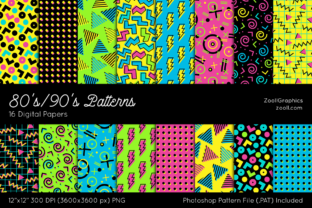
80s & 90s Patterns Digital Papers
In a world where digital design is becoming increasingly essential, the resurgence of retro aesthetics has brought back a nostalgic charm that resonates with both creators and consumers. 80s & 90s Patterns Digital Papers offer a unique blend of vintage style and modern usability, making them a versatile resource for anyone involved in creative projects. These digital papers are not just visually appealing; they are also highly functional, designed to meet the needs of a wide range of users.
The Aesthetic of Nostalgia
Designing with 80s & 90s Patterns Digital Papers brings a sense of nostalgia that's hard to replicate with contemporary designs. The vibrant neon colors—yellow, blue, pink, and green—capture the essence of a bygone era, evoking memories of iconic fashion, music, and pop culture from the late 20th century. These patterns are inspired by the bold and colorful visuals that defined the decades, offering a fresh take on classic styles.
Whether you're creating a scrapbook layout or designing a digital invitation, these papers provide a rich visual palette that can elevate your project. The seamless tileable nature of these digital papers ensures that they can be used in various formats without any visible seams, making them ideal for backgrounds, borders, and overlays.
Key Features of 80s & 90s Patterns Digital Papers
- Vibrant Neon Colors: These papers feature bright, eye-catching hues that stand out and add energy to any design.
- Seamless Tiling: The high-quality design allows for easy tiling, ensuring a smooth and continuous look across large surfaces.
- High Resolution: With a resolution of 300 dpi and dimensions of 12 x 12 inches (3600 x 3600 px), these papers are perfect for both print and digital use.
- ZIP File Inclusion: The package includes 16 PNG files along with a PAT file for Photoshop, providing flexibility for different design software.
These features make 80s & 90s Patterns Digital Papers an excellent choice for both beginners and seasoned designers. Whether you're working on a personal project or a professional endeavor, these papers offer the tools needed to bring your vision to life.
Applications and Use Cases
The versatility of 80s & 90s Patterns Digital Papers makes them suitable for a wide range of applications. From scrapbooking and planner embellishing to party invitations and gift wrapping, these papers can enhance any creative project. Their bold colors and retro patterns are particularly well-suited for themes that celebrate the past, such as retro-themed events, birthday parties, or anniversary celebrations.
For professionals in the design industry, these papers can serve as a valuable resource for creating templates, mockups, and promotional materials. Business owners looking to create a unique brand identity may find inspiration in the nostalgic aesthetic of these designs. Additionally, online users who engage in digital crafting or DIY projects can benefit from the ease of use and adaptability of these digital papers.
Real-World Examples
- Scrapbooking: A designer might use these papers to create a memory scrapbook that captures the essence of a family's history through a retro lens.
- Planner Embellishing: Adding these papers as background elements to a planner can give it a fun and personalized touch.
- Party Invitations: For a themed event, using these papers as the base for invitations can instantly set the tone and atmosphere.
- Gift Wrapping: Incorporating these papers into gift wrapping can transform ordinary presents into memorable experiences.
Each of these examples highlights how 80s & 90s Patterns Digital Papers can be applied in practical ways, offering both aesthetic appeal and functional value.
Evaluating Suitability for Your Needs
Before incorporating 80s & 90s Patterns Digital Papers into your projects, it's important to consider whether they align with your specific goals and preferences. While these papers are highly versatile, they may not be suitable for every design scenario. For instance, if you're working on a project that requires a more minimalist or modern aesthetic, these papers might not be the best fit.
However, for those seeking to infuse their work with a sense of nostalgia and vibrancy, these papers can be an invaluable asset. They are particularly well-suited for projects that aim to evoke a specific era or theme. It's also worth considering the intended audience of your project, as the retro style may resonate more strongly with certain demographics.
Additionally, it's important to evaluate the technical requirements of your design software. The inclusion of a PAT file for Photoshop ensures compatibility with this popular tool, but users of other software may need to explore alternative methods for integrating these papers into their workflow.
Strengths and Limitations
The strengths of 80s & 90s Patterns Digital Papers lie in their vibrant colors, seamless tiling, and high resolution. These qualities make them ideal for both print and digital use, allowing for a wide range of creative applications. However, there are also some limitations to consider. For example, the bold nature of these designs may not be appropriate for all contexts, and the retro aesthetic may not appeal to everyone.
Furthermore, while the ZIP file includes a variety of files, users should be aware that the number of patterns provided may not be sufficient for large-scale projects. It's always a good idea to assess your project's scale and complexity before deciding on the number of papers you need.
Conclusion
In conclusion, 80s & 90s Patterns Digital Papers offer a unique combination of nostalgia and functionality that can enhance a wide range of creative projects. Whether you're a hobbyist, a professional, or a business owner, these papers provide the tools needed to bring your ideas to life. By understanding their features, applications, and limitations, you can make informed decisions about how to best utilize them in your work. Embrace the retro charm of these digital papers and let your creativity shine through.